13 hr
Milan to Lake Como, St. Moritz & Bernina Red Train Day Tour
- Expert local guide
- Small group
- Skip-the-line access
- Free cancellation
Bernina Express From Milan — Reserved Seats & Alpine Connections
Rails climb through granite, valleys open to snow.
Compare fares, pick the fit — all bookings are mobile-voucher and eligible for free cancellation where shown.
13 hr
11 hr
12 hr
Worth it for scenery-first travelers, skippable for budget crowds
Booking the bernina express from milan means paying 47.99 EUR for a seat reservation plus fare, and the panoramic rail journey largely earns it. That figure buys guaranteed floor-to-ceiling window seats on the UNESCO-listed Albula-Bernina line, the Alpine pass crossing near Ospizio Bernina, and the spiralling Brusio viaduct — scenery you cannot get from a road trip. Value math is simple: for a full day of Swiss mountain landscapes, the per-hour cost is modest against typical Milan day-tour prices. The reservation is the real premium, since an unreserved regional service covers similar track for less but without the tinted panoramic glass or promised seat. Bernina Express from Milan tours pay off for photographers, first-timers, and anyone treating the ride itself as the destination. Committed budget backpackers who only want cheap transit will find the surcharge harder to justify.
Bottom line: If the view is the point, bernina express from milan tickets are money well spent; if you only want to get there cheaply, take the regional train.
For a Milan-based day trip, the Bernina Express from Milan is the practical choice — the Glacier Express demands an overnight stay and a much longer, costlier journey. Both are Swiss panoramic train tours, but they serve different trips.
|
Top pick Bernina Express |
Glacier Express | |
|---|---|---|
| Starting point | Milano Centrale, Italy | Zermatt or St. Moritz, Switzerland |
| Route length and duration | Tirano to St. Moritz, about 2.5 hrs | |
| Price and reservation cost | 47.99 EUR (seat + train fare, per person) | From CHF 153, 2nd class (plus reservation) |
| Scenery style | Alpine passes, glaciers, spiral viaducts | Matterhorn views, Oberalp Pass, Rhine Gorge |
| Dining service | No formal dining car | On-board meal service, own kitchen |
| Best for day-trippers from Milan | ✓ — same-day return feasible | — requires overnight stay in Switzerland |
| See tickets & prices |
Verdict: Anyone booking a bernina express from milan tour can realistically do it in a single day, while the Glacier Express is a full-day, one-way journey best paired with an overnight stop in St. Moritz or Zermatt.
Hand-picked experiences loved by thousands of travelers
11 hours
Free Cancellation
Ride a UNESCO heritage railway through glaciers and Alps on an epic day trip from Milan.
12 hours
Free Cancellation
Ride the legendary Bernina Express through glacier-draped Alps to glamorous St. Moritz — all in a day.
12 hours
Free Cancellation
Escape Milan for a day of Alpine splendor — private car, first-class train, and St. Moritz await.
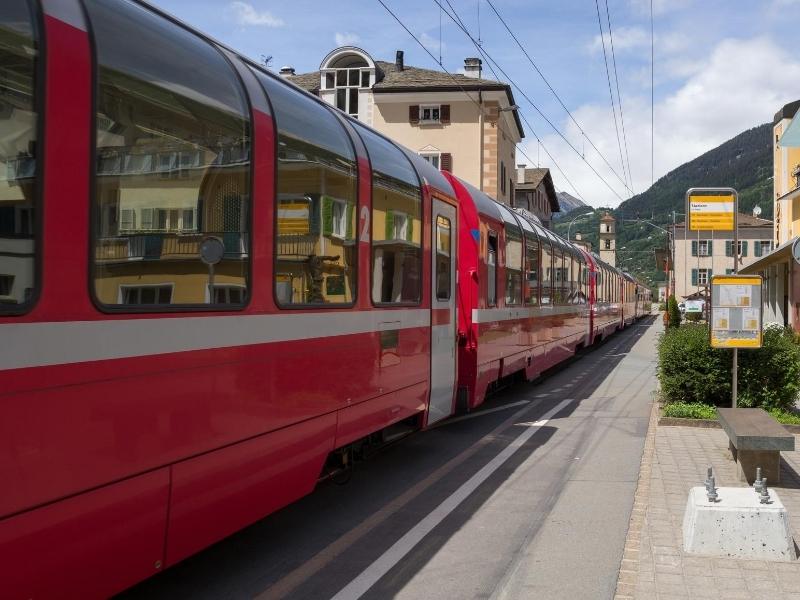
Board the Trenord regional train from Milano Centrale toward Tirano, the first leg of a bernina express from milan itinerary
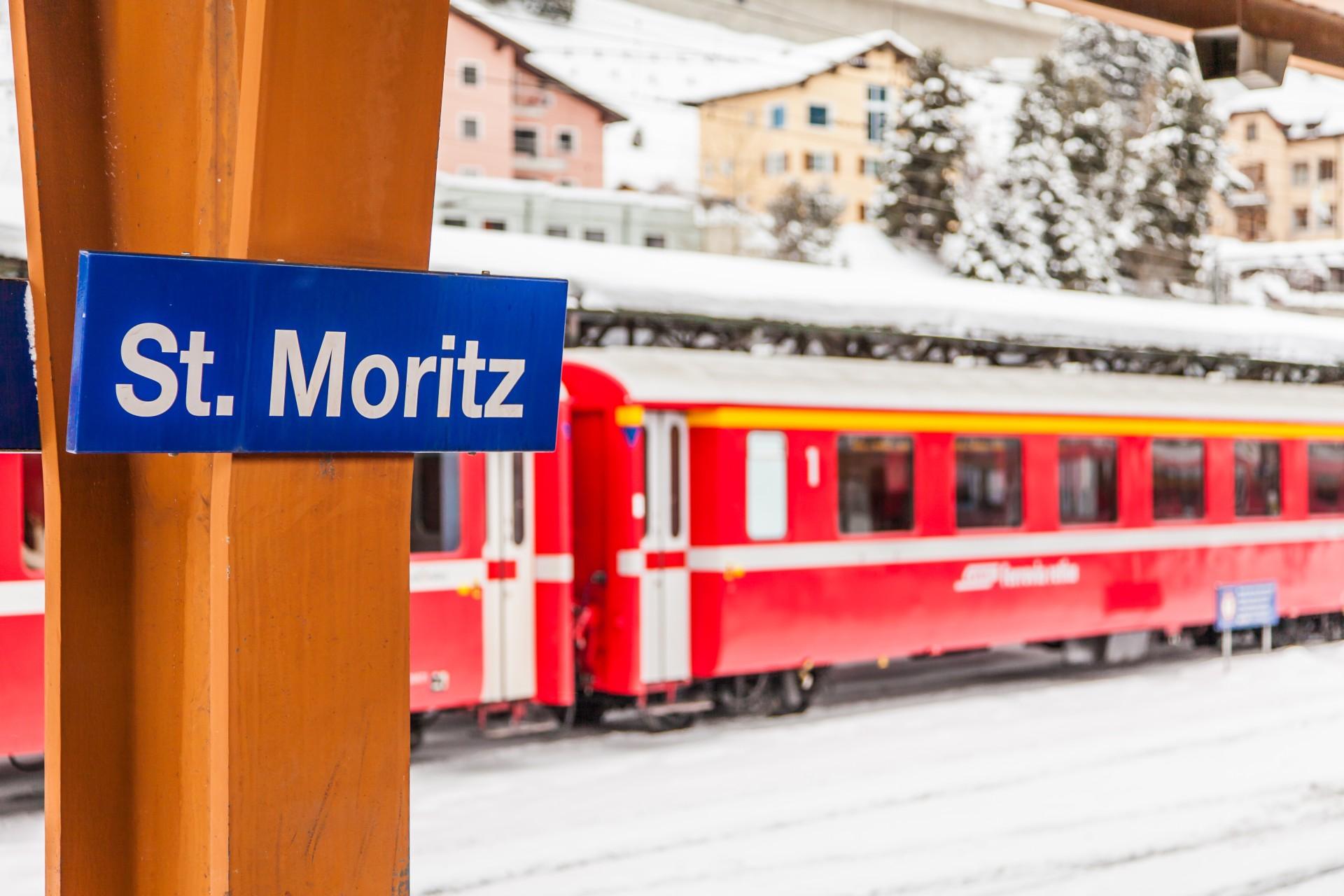
The Italian border town where the Trenord regional line from Milano Centrale meets the Rhaetian Railway platforms; the walk between the two stations crosses a public plaza rather than an internal transfer corridor, a layout unique among Bernina Express access points.
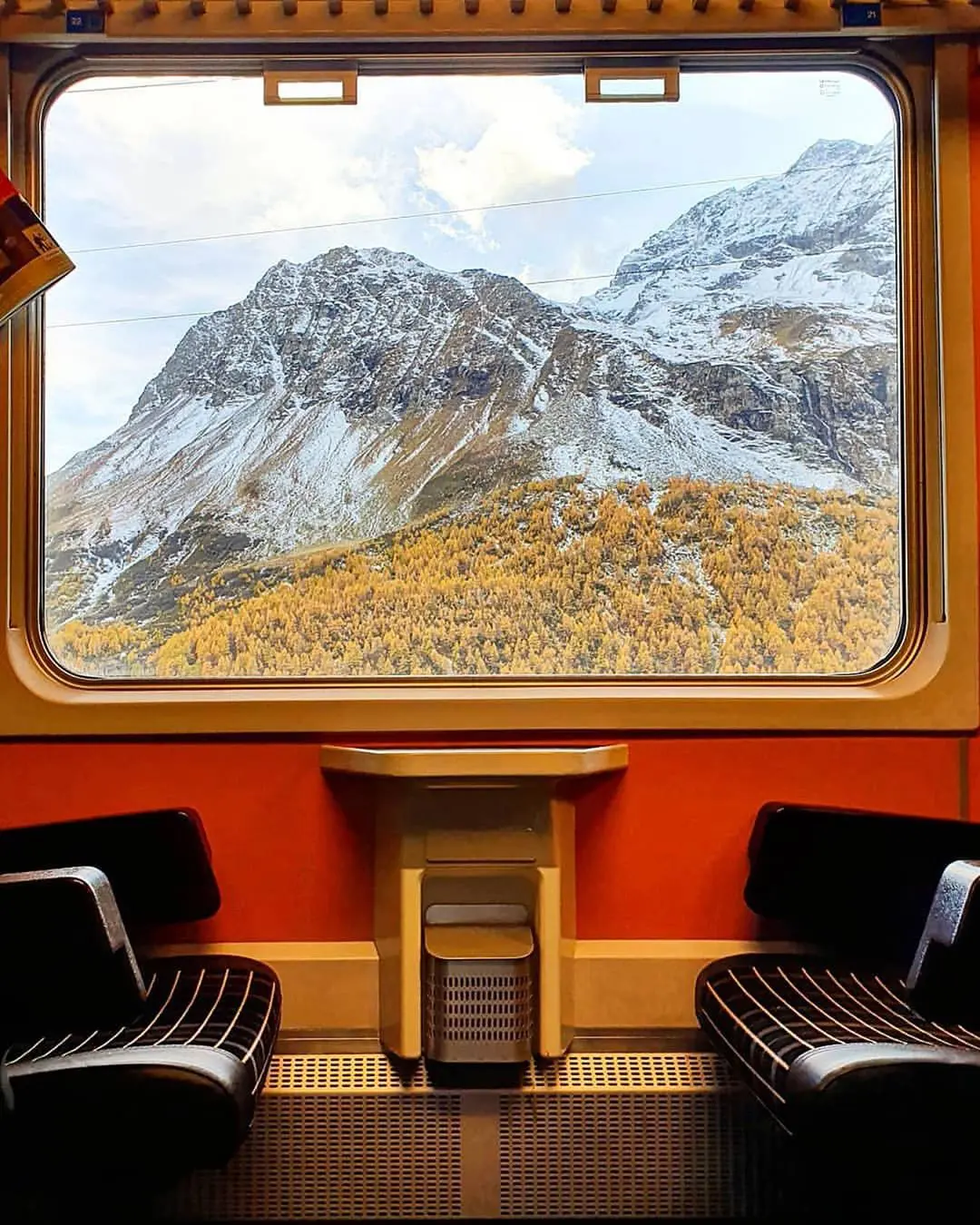
You arrive at Milano Centrale under the vaulted iron canopy, mobile voucher ready, and find your onward regional service to Tirano waiting at the platform. You settle in as the train pulls out of Piazza Duca d'Aosta, watching the Lombardy plain slide past — first industrial fringes, then the vineyards climbing the Valtellina slopes. At Tirano you cross to the Rhaetian Railway platform, where the red panoramic carriages of the bernina express from milan connection sit gleaming. You claim your reserved seat beneath the curved glass roof and press your forehead close as the train immediately begins to climb. You watch the Brusio spiral viaduct loop beneath you, a full circle of stone, then count the switchbacks as larch gives way to bare rock. You pause at Alp Grüm, where the platform opens onto the Palü glacier, and step out for photographs in the thin, cold air. Higher still, you skirt the Lago Bianco, its water the pale grey-blue of glacial silt, and reach Ospizio Bernina at the pass. You feel the temperature drop through the glass. By the time the descent begins toward Pontresina and St. Moritz, you have crossed from Italian summer heat into alpine snowline in a little over two hours.
All the details about your upcoming adventure in one place
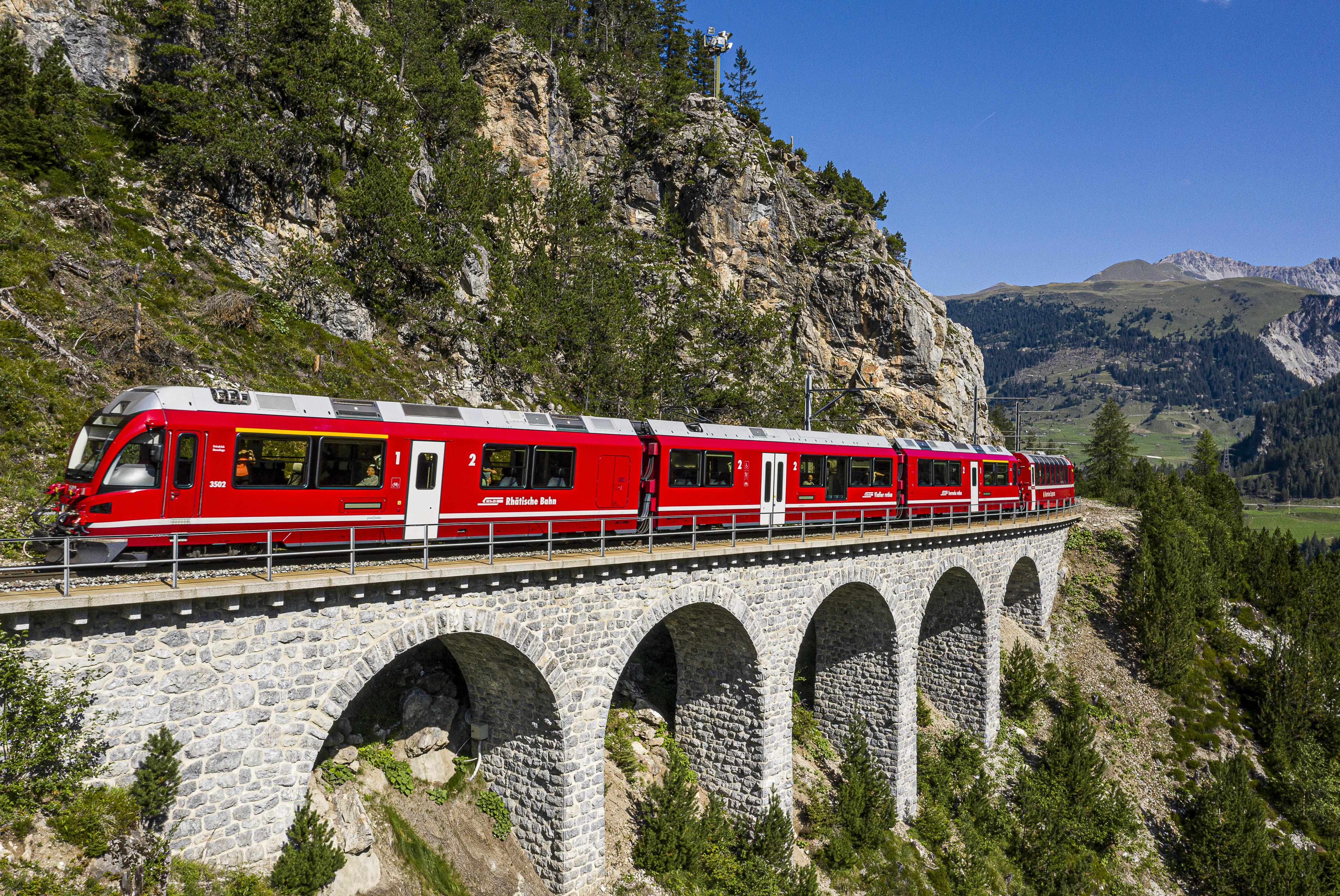
The bernina express from milan pairs a comfortable rail transfer to the Swiss border with a panoramic UNESCO-listed journey across the Rhaetian Railway, where floor-to-ceiling windows frame alpine passes, glaciers, and the spiraling Brusio viaduct. Departing toward Tirano and climbing past Alp Grüm to over 2,250 metres, this Milan alpine rail day trip crosses 196 bridges and 55 tunnels without a single cog assist. Bernina express from milan tickets typically bundle guided coach segments and reserved panoramic carriage seats, so travellers spend the day watching the scenery rather than managing logistics.
The Bernina line crosses 196 bridges and threads 55 tunnels without a single rack rail, climbing to 2,253 metres at Ospizio Bernina — the highest point on the European rail network traversed by adhesion alone. A journey on the bernina express from milan begins not in Switzerland but in Lombardy, where travellers gather at Milano Centrale before onward connections carry them north toward Tirano and the frontier of the Rhaetian Alps. The Rhaetian Railway opened the Bernina section in stages between 1908 and 1910, an electrified metre-gauge feat that stitched the Engadine to the Valtellina across terrain engineers had long deemed impassable. In 2008 UNESCO inscribed the Albula and Bernina lines together as a World Heritage Site, one of only three railways to hold that distinction. The panoramic carriages, with their curved observation glass, entered service to frame the ascent that older wooden coaches once merely endured. What draws travellers today is the compression of climate and landscape into a few hours. A Milan Bernina railway tour leaves the rice plains and poplar rows of the Po basin, gathers the vineyards terraced above the Valtellina, and rises past larch forest into a world of glaciers and moraine. The Morteratsch glacier glints to the west; the Lago Bianco spreads its milky, mineral-fed water across the pass; the spiral Brusio viaduct coils the descent into a single stone helix. Each shift in altitude rewrites the view through the window. Milano Centrale itself frames the departure. Inaugurated in 1931, its vaulted iron-and-glass train shed and monumental stone facade make it among the grandest railway stations in Europe, a fitting threshold for those tracing the bernina express from milan toward the high passes. From the Piazza Duca d'Aosta forecourt, the regional connection to Tirano feeds directly into the Rhaetian network, so the transition from Italian intercity travel to Swiss alpine railway happens across a single platform. The route survives as a working line, not a museum piece. Commuters, hikers bound for the Diavolezza cable car, and photographers share the same carriages that once carried the first Edwardian tourists. Among Milan alpine rail landmarks, few offer such a continuous thread from urban terminus to glacial summit. The engineering restraint of the original builders — no cogwheels, only careful gradients and generous curves — remains legible in every loop and gallery. It is a line that treats the mountains as a partner rather than an obstacle, and that ethos, more than a century on, still defines what the panoramic carriages set out to reveal.
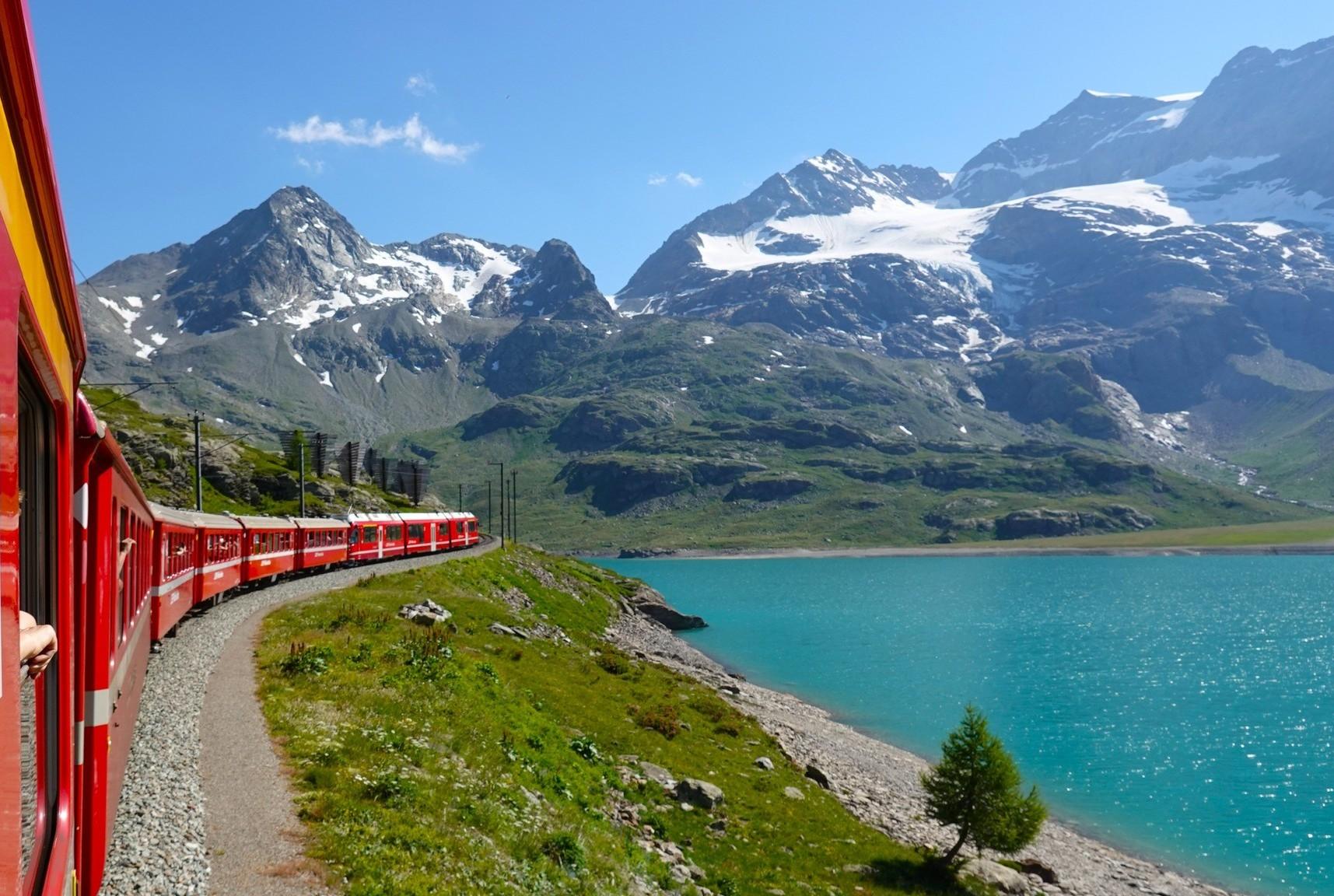
It is a line that treats the mountains as a partner rather than an obstacle.
No formal dress code applies to a bernina express from milan journey, but layers are recommended since the route climbs to alpine altitude near the Bernina Pass while Milano Centrale itself sits at low elevation. Comfortable shoes help with the walk between the Trenord platforms and the Rhaetian Railway platforms at Tirano station.
Milano Centrale operates standard Italian rail station security with visible police and occasional bag checks near platform entrances; there are no airport-style scanners for domestic and regional departures. Passengers connecting onto the Bernina Express from Milan route should keep tickets and any printed seat reservation accessible for on-train inspection between Tirano and the Swiss border.
Personal photography is permitted throughout Milano Centrale and on board Trenord and Rhaetian Railway carriages, including through the panoramic windows used on Bernina Express services. Tripods and drones are not permitted on platforms or inside station halls.
Children can travel on the same regional and Bernina Express seat reservations as adults, and the panoramic carriages give younger passengers a clear view of the Alpine scenery without needing to stand. Prams fit in the vestibule areas of the regional trains from Milano Centrale, though the platform transfer at Tirano involves a short walk between station buildings.
Milano Centrale provides step-free access via lifts linking the ground floor ticket halls, the mezzanine, and the elevated platform level, plus a dedicated Sala Blu assistance point near track 4 for travelers with reduced mobility. Wheelchair boarding assistance for the Tirano connection and onward Bernina Express services should be requested at least 24 hours in advance through the station assistance line.
Passengers may bring their own food and drink onto both the Trenord regional trains from Milano Centrale and the Bernina Express carriages from Tirano; there is no cafe car on most Bernina Express services, so pre-departure purchases at the station are the norm. Alcohol is permitted in moderation but glass bottles are discouraged given the narrow onboard aisles.
First regional connection toward Tirano near 06:20
Best arrival window
06:00–07:00, since onward connections to Tirano depart around 06:20–07:00
Public transport · 10-15 min from central Milan · Standard ATM metro fare, around EUR 2.20
Take metro line M2 (green) or M3 (yellow) directly to the Centrale FS stop, which sits beneath Milano Centrale station.
Bernina Express seat reservations can be changed to a different departure on the same day free of charge up until the scheduled departure time. Refunds beyond a same-day switch follow the fare conditions attached to the 47.99 EUR seat reservation plus train fare and are not guaranteed once the reserved train has departed.
Recommended time
Full day (10-11 hours)
A bernina express from milan round trip is a full-day undertaking, not a quick outing: budget roughly 10-11 hours door to door. That covers the regional train down to Tirano, the four-hour scenic ride up through the Alps, a break at the turnaround point, and the return leg back to Milan. Arriving in the 06:00-07:00 window matters because the earliest onward connections to Tirano leave around 06:20-07:00, and missing that slot pushes your whole itinerary later. Add extra buffer if you plan a stop in St. Moritz or Tirano's old town rather than a direct there-and-back.
Crowd levels through the day
Weather · crowds · average price — dots go green to amber to red as each metric rises.
April and May bring milder temperatures around 10-18°C in Milan and melting snow revealing green valleys along the Bernina Express from Milan route, with moderate crowds before peak season.
Bernina Express seat reservations sell out in summer, so secure the 47.99 EUR reservation plus train fare well before travel dates.
Piazza Duca d'Aosta 1, 20124 Milano, Italy
Central departure hall for tour groups booking a bernina express from milan tour
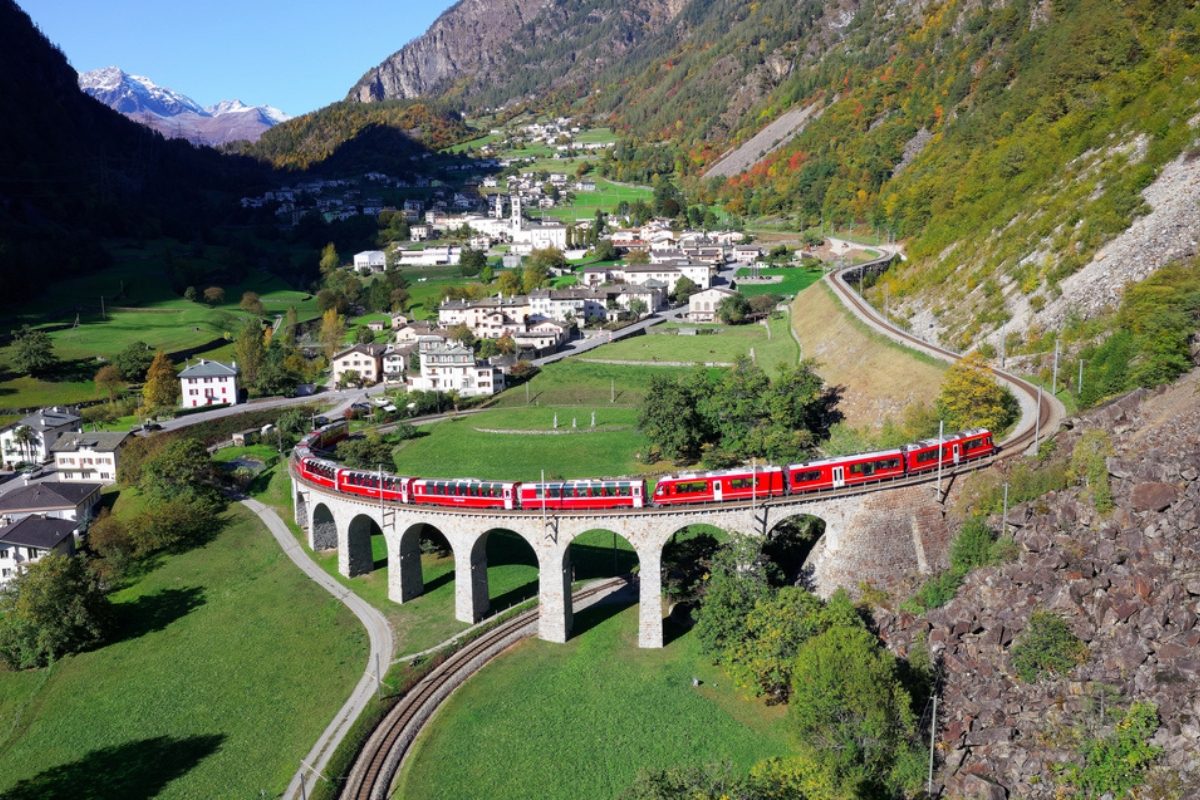
Get directionsThe story of the bernina express from milan route begins not in Lombardy but in the Swiss canton of Graubünden. In 1889 the Rhaetian Railway was founded to open the isolated Alpine valleys to commerce. Its engineers faced granite walls, deep gorges, and gradients no adhesion railway had yet mastered without racks. Their answer was a sequence of viaducts and spirals that still define the line. In 1902 the Landwasser Viaduct opened near Filisur. Its six arches curve directly into a tunnel bored through a vertical cliff, a solution devised because no space remained for an approach embankment. Masons laid limestone blocks without conventional scaffolding, working from the piers upward. The 65-metre height and the tunnel entry made the structure a landmark of early concrete-and-stone engineering. The Bernina line proper, running from Thusis toward Tirano, was completed in 1910 under engineer Achille Bianchi. It climbs to 2,253 metres at Ospizio Bernina, the highest transalpine crossing worked entirely by adhesion. In 1908 the Brusio spiral viaduct was finished at the Italian end. This open circular stone viaduct lets trains lose altitude within a tight radius, a device borrowed from earlier Alpine practice and refined here. Descriptions of any bernina express from milan tour still centre on this looping masterpiece. Electrification followed. The Bernina railway adopted direct current in 1910, while the Albula section converted in 1919. On 7 July 2008 UNESCO inscribed the combined Albula and Bernina lines as a World Heritage Site, honouring the rhaetian railway's dialogue with the mountain terrain. Modern bernina express from milan tours connect through Tirano, where Italian regional services meet the Swiss red carriages. Travellers booking bernina express from milan tickets today ride tracks laid over a century ago. The panoramic milan to bernina train journey, the spiral viaducts, and the UNESCO listing together preserve a construction saga that survives almost unchanged since 1910.
The Rhaetian Railway company is founded to link Graubünden's remote valleys.
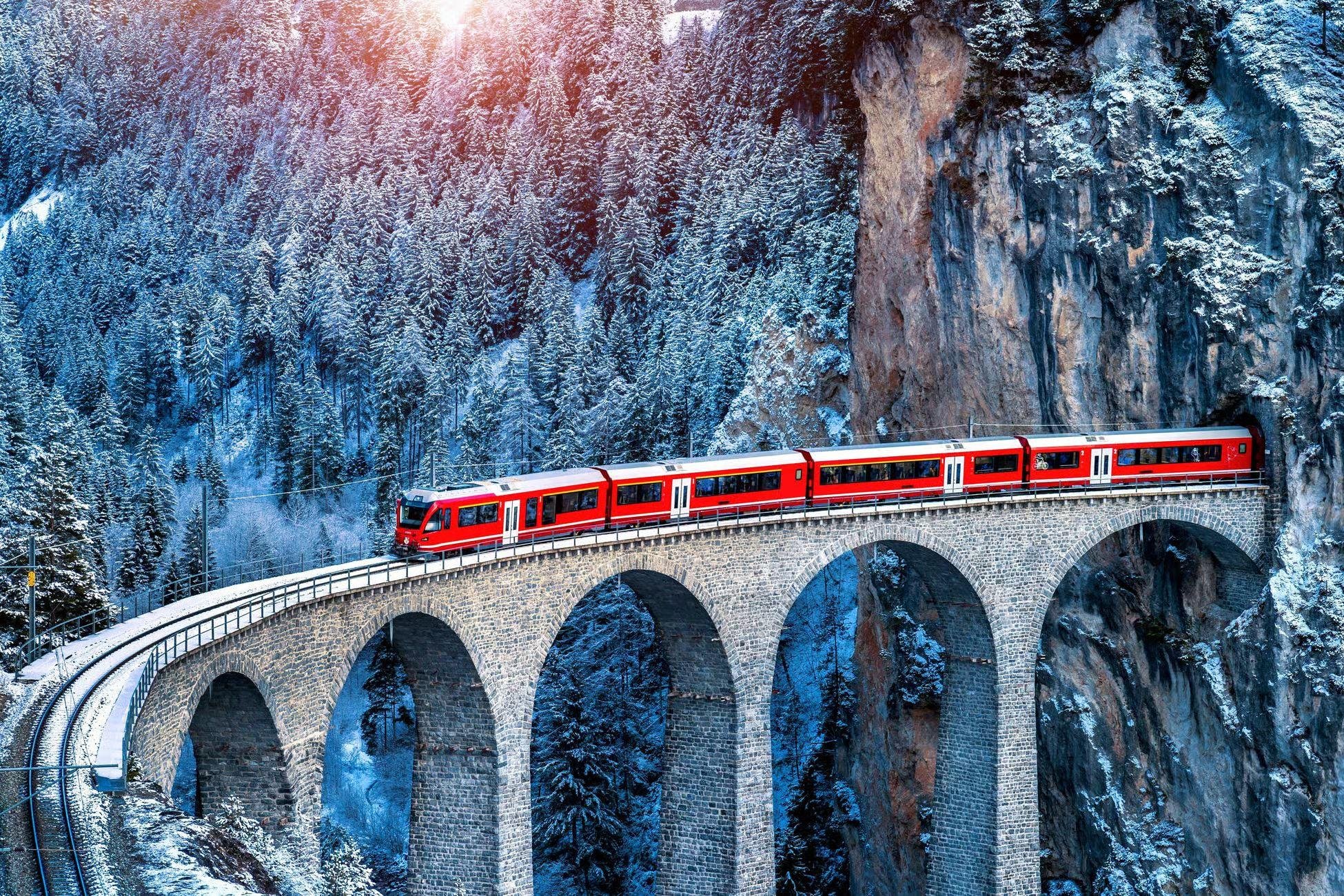
The Landwasser Viaduct opens, curving from six arches straight into a cliff tunnel.
The Brusio spiral viaduct is completed at the Italian end near Tirano.
The Bernina line reaches Tirano, crossing the Alps at 2,253 metres by adhesion alone.
The Albula section is electrified, unifying the network's power supply.
UNESCO inscribes the Albula and Bernina lines as a World Heritage Site on 7 July.
The heritage route still carries the panoramic red carriages over its original century-old track.
Just past Filisur, the tunnel-exit curve of the viaduct is framed from the Aussichtsplattform Nord, a short walk from the station; northbound travelers get the clearest window angle on the left side as the train banks into the rock face.
The train pauses roughly ten minutes at this ledge station, long enough to step onto the platform for an unobstructed view over the Poschiavo Valley and Palü Glacier, with a fixed photo frame near the restaurant terrace.
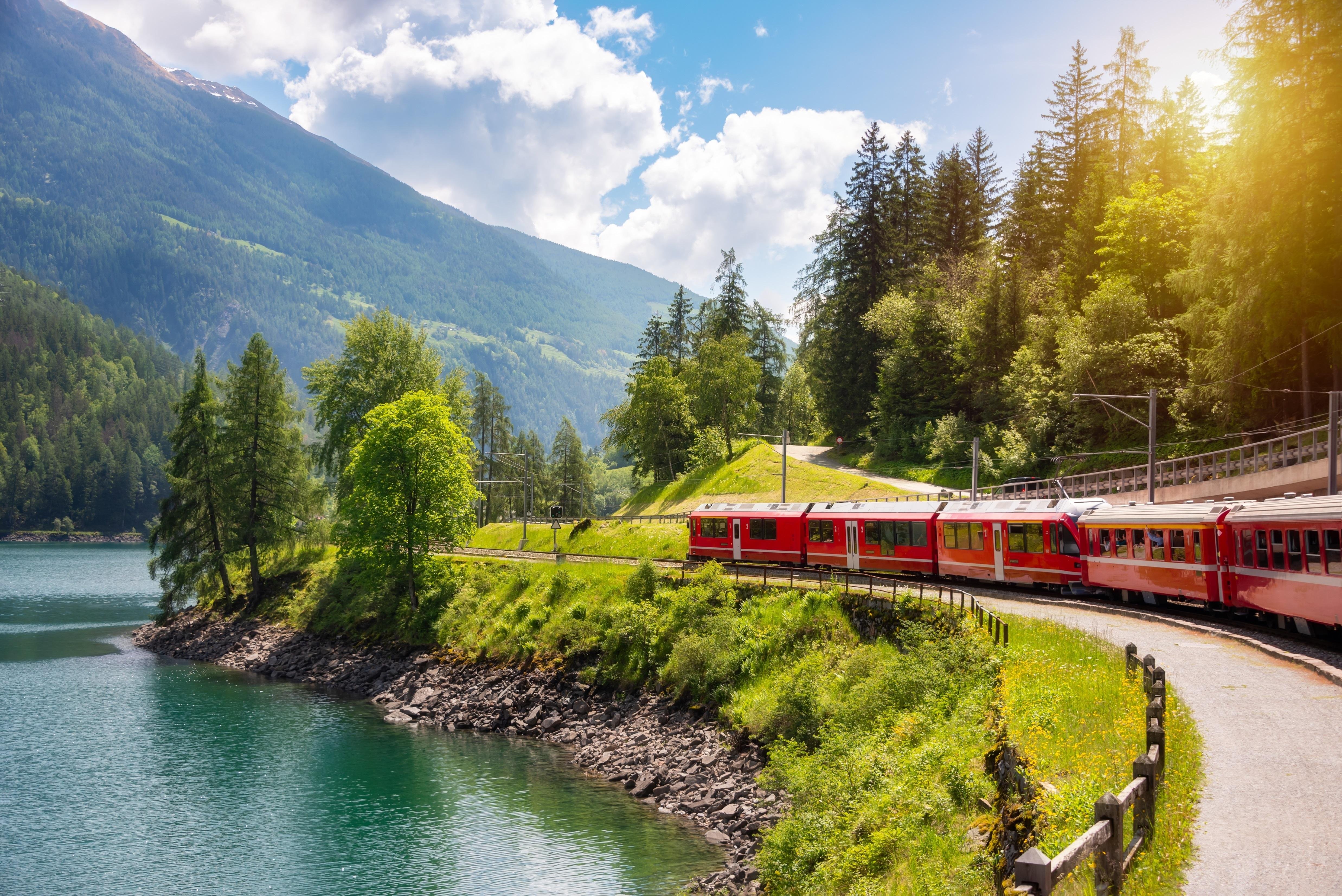
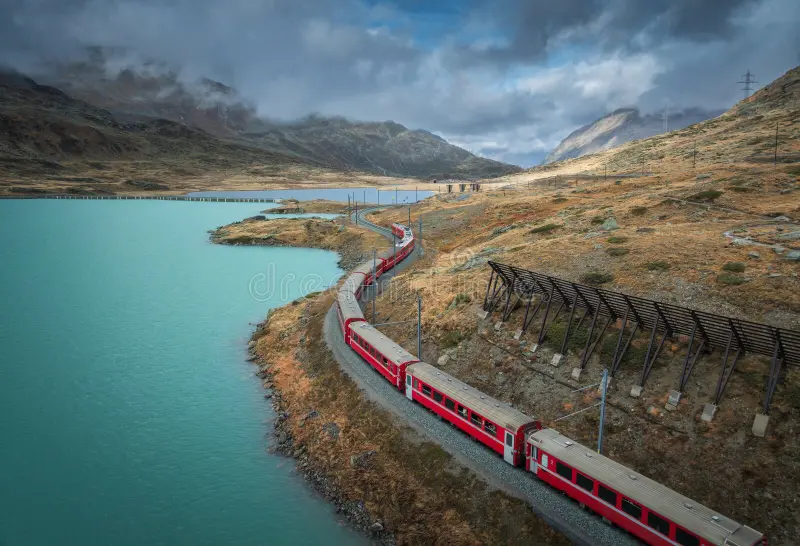
Riders on a bernina express from milan itinerary pass directly along the eastern shore of this pale glacial lake between Ospizio Bernina and Alp Grüm; window seats on the right heading toward Tirano catch the water and snowfields together.
South of Brusio village, a short trail off the Brusio Circular Trail reaches open meadows facing the nine-arch loop, where the train's full 360-degree turn and self-crossing track are visible from ground level.
At the route's highest point, 2,253 meters, the corridor-side window opposite Lago Bianco frames rocky watershed terrain and open sky; a brief slowdown here gives a steadier handheld shot than most stretches.
Milano Centrale has full breakfast options right by the platforms, but once aboard the bernina express from milan there is no dining car, only a minibar trolley, so most travelers eat before boarding or wait until Tirano.
Autogrill's revival of the historic 1928 Milanese café, good for a fast cappuccino and brioche before an early departure; gets busy right at opening as commuters and bernina express from milan tours groups overlap.
Sit-down counter service near the platforms with pasta, salads and Neapolitan coffee; slower table service, so best if you have 45+ minutes before your bernina express from milan tickets check-in rather than a tight connection.
A cart with snacks, sandwiches and drinks passes through the carriages during the ride; no full meals are served, so it suits a quick coffee rather than lunch on longer legs of the bernina express from milan tour.
Valtellina-style dishes like bresaola, pizzoccheri and local cheese, right by the Rhaetian Railway square in Tirano; fills quickly with arriving groups, so booking ahead is worth it.
Simple takeaway-style spot on Viale Italia for pizza slices and heated fresh pasta trays, good for a fast bite between connections, though it tends to close mid-afternoon.
Real experiences from real travelers
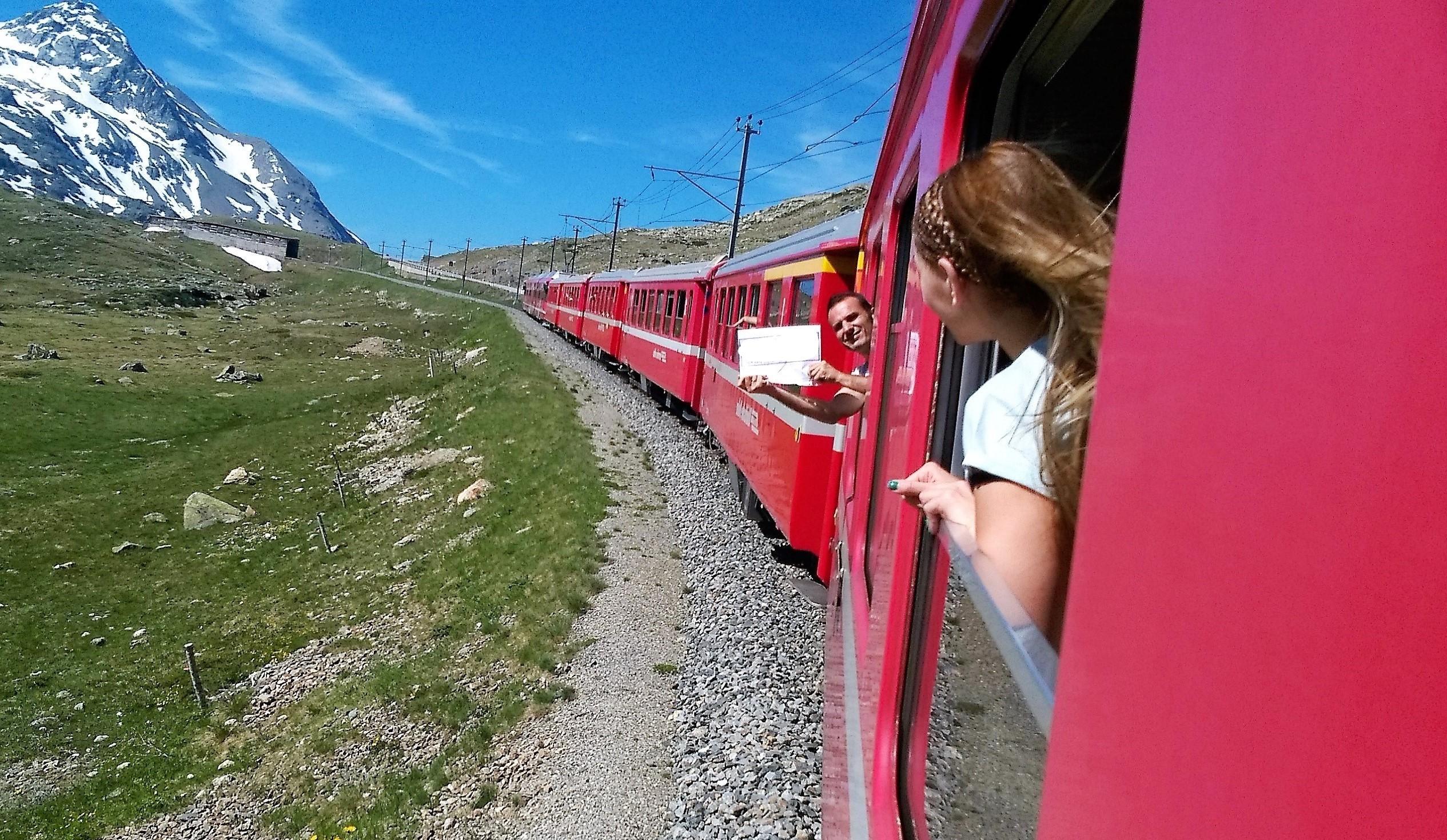
We booked the bernina express from milan as a full day out and it ran without a hitch, coach to Tirano then the panoramic carriage up to St. Moritz. The Brusio spiral viaduct was the moment everyone reached for their phones, and the glacier at Ospizio Bernina still had snow in June.
The panoramic windows curve right over your head so you catch the peaks without craning your neck. Crossing the Landwasser Viaduct with the Rhaetian Railway UNESCO plaques along the route made the engineering feel real.
A treno rosso del Bernina da Milano is a long day, we left before seven and got back after dark. The alpine scenery around Alp Grüm made up for the early start, though I'd pack more snacks than you think you need.
The milky turquoise of Lago Bianco near the pass was the highlight for me, the water sits right beside the track. Doing the bernina express from milan tours meant the transfers were handled and I just watched the mountains.
What surprised me was the descent, you go from glacier country down to chestnut forests near Tirano in a couple of hours. The Bernina Express Milan tour felt like two seasons in one ticket.
Snow was piled beside the carriages at the Bernina pass and the light on the peaks was clean and sharp. Booking bernina express from milan tickets saved us fussing with regional connections at Tirano.
Down at lake level it was mild, up at Ospizio Bernina the wind cut straight through my jacket. The Rhaetian Railway scenery through the Val Poschiavo was the stretch I keep thinking about.
Late autumn meant golden larches all along the Val Poschiavo and hardly any crowds in the carriage. The bernina express from milan gave us the whole arc from Italian lakes to the Swiss Alps in a single day.
We had seats on the right heading up and caught the Brusio viaduct and Alp Grüm perfectly. If you want a Milan to Swiss Alps scenic train that does the work for you, this is it.
The Bernina Express from Milan trip is genuinely scenic, the alpine landmarks around the Bernina range are the draw. My only gripe was the turnaround felt rushed and the coach leg back was warm and slow.
Everything you need to know for your journey
Milano Centrale, the departure point for a bernina express from milan tour, is open daily from 04:00 to 01:00, with the earliest onward connections to Tirano departing around 06:20-07:00.
Yes, Milano Centrale provides lifts linking the ground floor, mezzanine, and platform levels, plus a Sala Blu assistance desk near track 4; travelers should request wheelchair boarding help at least 24 hours ahead for the full bernina express from milan itinerary.
Standard rail restrictions apply, including no open flames, weapons, oversized unaccompanied luggage, and hazardous materials; a full list is available at the station information desk.
Photography is permitted throughout the journey, including through the panoramic windows on board, though tripods and drones are not allowed on platforms or in station halls.
Booking bernina express from milan tickets several weeks ahead is recommended for summer travel, since seat reservations on the Bernina Express sell out quickly during peak season.
There is no formal dress code, but layered clothing is practical given the altitude change between Milan and the Bernina Pass.
Yes, passengers may bring their own food and drink for both the regional leg to Tirano and the Bernina Express carriages, since most services do not include a cafe car.
Milano Centrale is reached via metro lines M2 and M3 to the Centrale FS stop, or by taxi to Piazza Duca d'Aosta 1, 20124 Milano, Italy.
Yes, children can travel on the same seat reservations as adults, and the panoramic windows make the journey easy for younger passengers to enjoy without standing.
Seat reservations can be switched to another same-day departure free of charge up until the scheduled departure time; refunds beyond that follow the fare conditions tied to the 47.99 EUR seat reservation plus train fare.
Piazza Duca d'Aosta, the Pirelli Tower, and Corso Buenos Aires all sit within a short walk of Milano Centrale and pair well with an early bernina express from milan tour.
A bernina express from milan tour costs 47.99 EUR per person for the seat reservation plus train fare, in addition to the separate Trenord ticket for the Milan-to-Tirano leg.
The plaza directly in front of Milano Centrale, framed by 1930s Milanese architecture and busy with trams and buses feeding the station.
Hotels clustered directly around Piazza Duca d'Aosta offer the shortest walk for an early bernina express from milan departure.
Join thousands of happy travelers who have discovered this incredible experience
Book Your Experience Now