Open today · 10:00 – 22:00

Milan Food Tour

Milan Food Tour — Guided Tastings & Market Walks

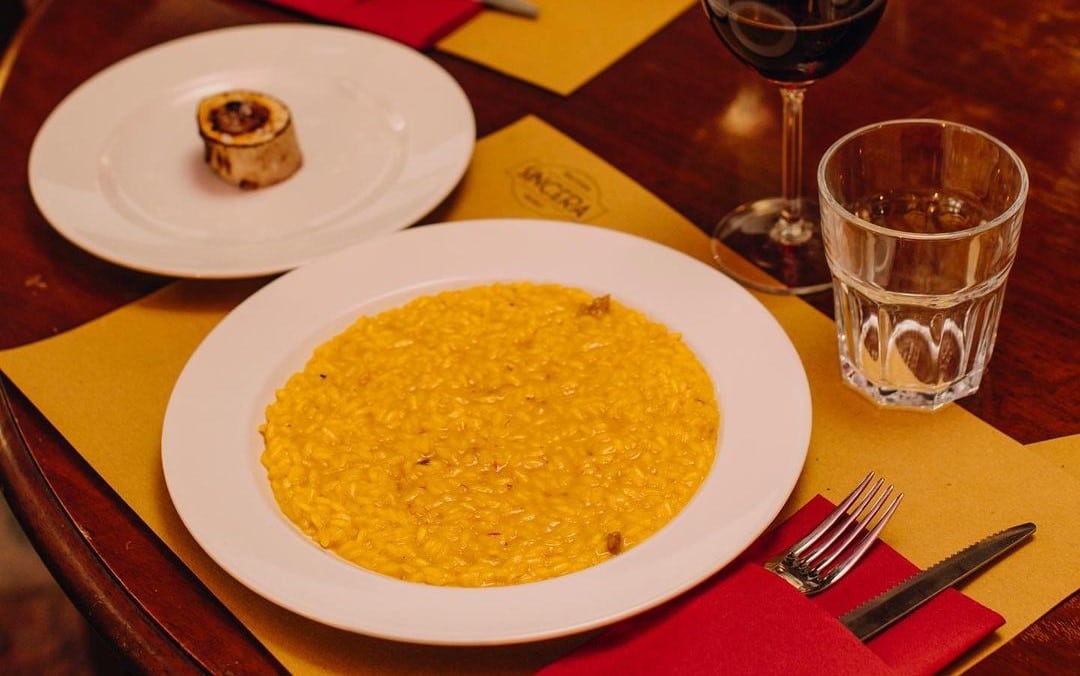
Saffron risotto by morning light, panettone by memory.

48K+ travelers chose this
Free Cancellation
Right now: Moderate — summer weekday Markets are freshest in the late morning before the lunch crowd arrives
3-4 hours recommended
1 Languages
Max 12 guests
Free Cancellation
Free cancellation Instant confirmation Mobile voucher Verified partner Book now, pay later
Choose your ticket

Ticket options at a glance

Compare fares, pick the fit — all bookings are mobile-voucher and eligible for free cancellation where shown.

Milan Navigli Sunset Food & Drinks Tour 3 hr 30 min
Standard Entry

Milan Navigli Sunset Food & Drinks Tour

4.7 (392)
€79
  • Entry ticket
  • Mobile voucher
  • Valid same day
  • Free cancellation
Book this ticket
Milan Culinary Walking Tour with Food Tastings 3 hr
Guided Experience

Milan Culinary Walking Tour with Food Tastings

4.8 (159)
€64
  • Expert local guide
  • Small group
  • Skip-the-line access
  • Free cancellation
Book this ticket
Featured Experiences

Popular tours & activities

Hand-picked experiences loved by thousands of travelers

Recommended Experience

Powered by GetYourGuide

Another traveler favorite

Powered by GetYourGuide
Milan History & Street Food Walk with Wine 3 hours Free Cancellation

Milan History & Street Food Walk with Wine

3 hours of Milanese landmarks, local bites, cured meats, cheese platters & a glass of fine wine.

4.9 (79)
FromFrom €99
See details
Milan Gourmet Food Tour: A Full Culinary Journey 3.5 hours Free Cancellation

Milan Gourmet Food Tour: A Full Culinary Journey

Taste Milan's soul across 4+ stops — pizza, risotto, salumi, and sweet endings await.

4.8 (88)
FromFrom €89.93
See details
Milan Navigli Private Food & Canal Culture Tour 3 hours Free Cancellation

Milan Navigli Private Food & Canal Culture Tour

A 3-hour private tasting walk through Milan's canal district — pizza, gelato, prosecco & local stories.

4.7 (4)
FromFrom €180
See details
Your journey

Step-by-step — what your day looks like

1

Meeting and welcome

Guide introduces the neighborhood and the day's tasting stops

2

First tasting stop

Cured meats, cheese, or focaccia at a local vendor

3

Market walkthrough

Browsing a covered market such as Mercato Centrale or Mercato della Darsena

4

Main course tasting

Risotto alla Milanese or another regional specialty paired with wine

5

Dessert and coffee stop

Tiramisu or panettone with espresso to close the route

6

Free time and farewell

Guide answers questions and suggests nearby spots

What you'll see

Highlights not to miss

Mercato Centrale Milano

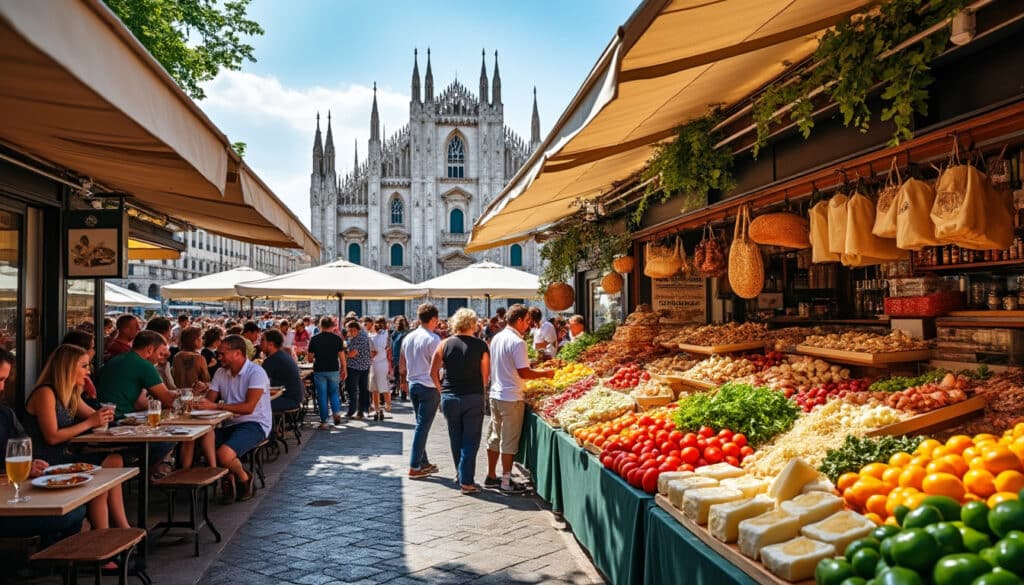
Housed inside Milano Centrale railway station on Piazza IV Novembre, this two-floor food hall spans roughly 4,500 square meters and hosts around 28 to 32 artisan food stalls under one roof. It opens daily from early morning until midnight, making it a flexible anchor stop on many routes.

Naviglio Grande

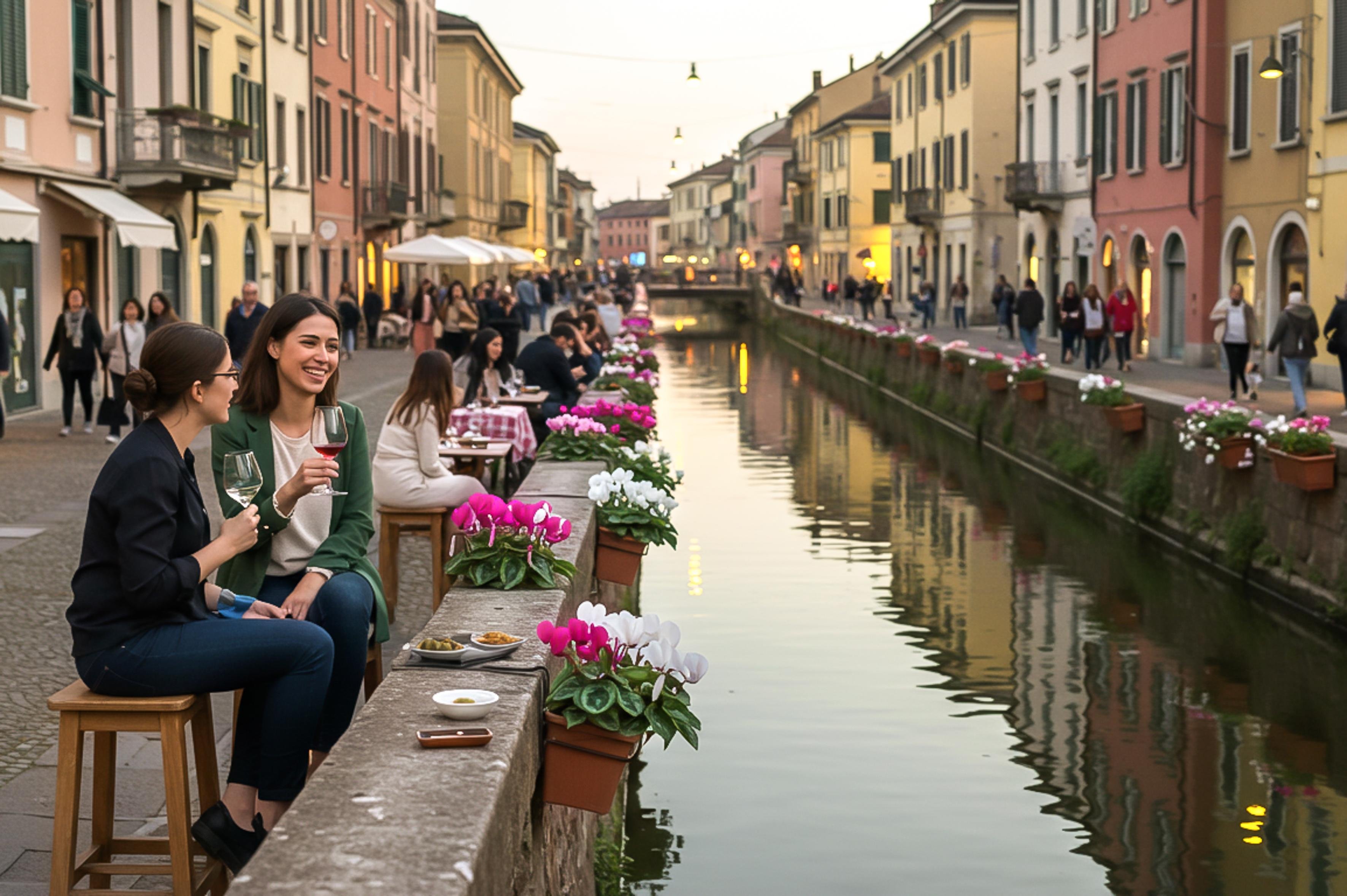
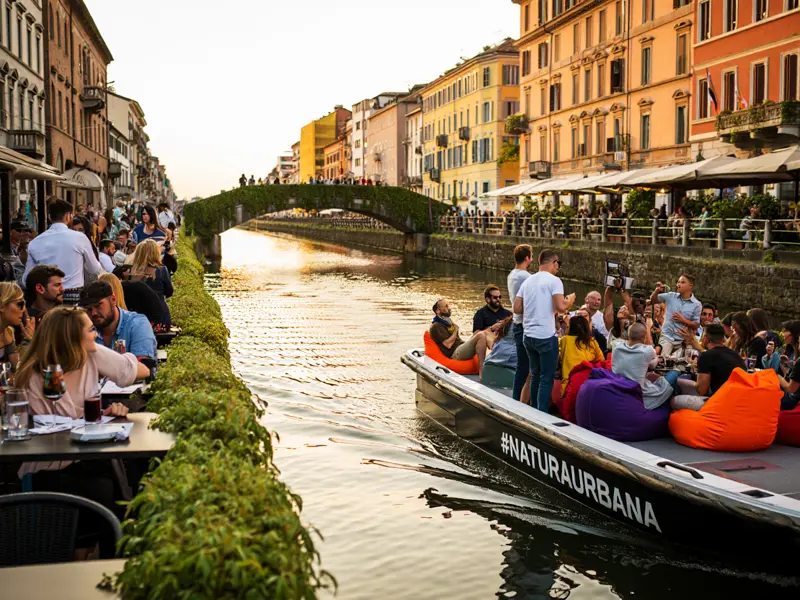
The oldest and longest of Milan's historic canals, Naviglio Grande was engineered in the 12th century and later associated with improvements attributed to Leonardo da Vinci's canal-lock designs. Its towpaths are lined with bars and trattorias that fill with locals at aperitivo hour.

Mercato della Darsena

A covered market at the harbor near Porta Ticinese, this hall sits beside the Darsena basin, once Milan's main inland port and now a public promenade. It specializes in regional produce and fresh fish alongside artisanal food stalls.

Mercato di Viale Papiniano

One of Milan's liveliest open-air markets, this stretch mixes clothing stalls with fruit and vegetable vendors known for some of the sweetest seasonal produce in the city. It sits within easy walking distance of the Navigli district.

Via Paolo Sarpi Chinatown

Home to one of Europe's oldest Chinatown districts, this street offers a contrasting stop on a broader food route, with bubble tea, dumplings, and grilled ravioli alongside traditional Milanese fare elsewhere on the walk.

Mercato Metropolitano

Built inside a former railway depot near Porta Genova, this food village combines street-food counters, a butcher and bakery, a beer garden, and a small urban vineyard across a sprawling indoor-outdoor space.

The experience

What the visit is really like

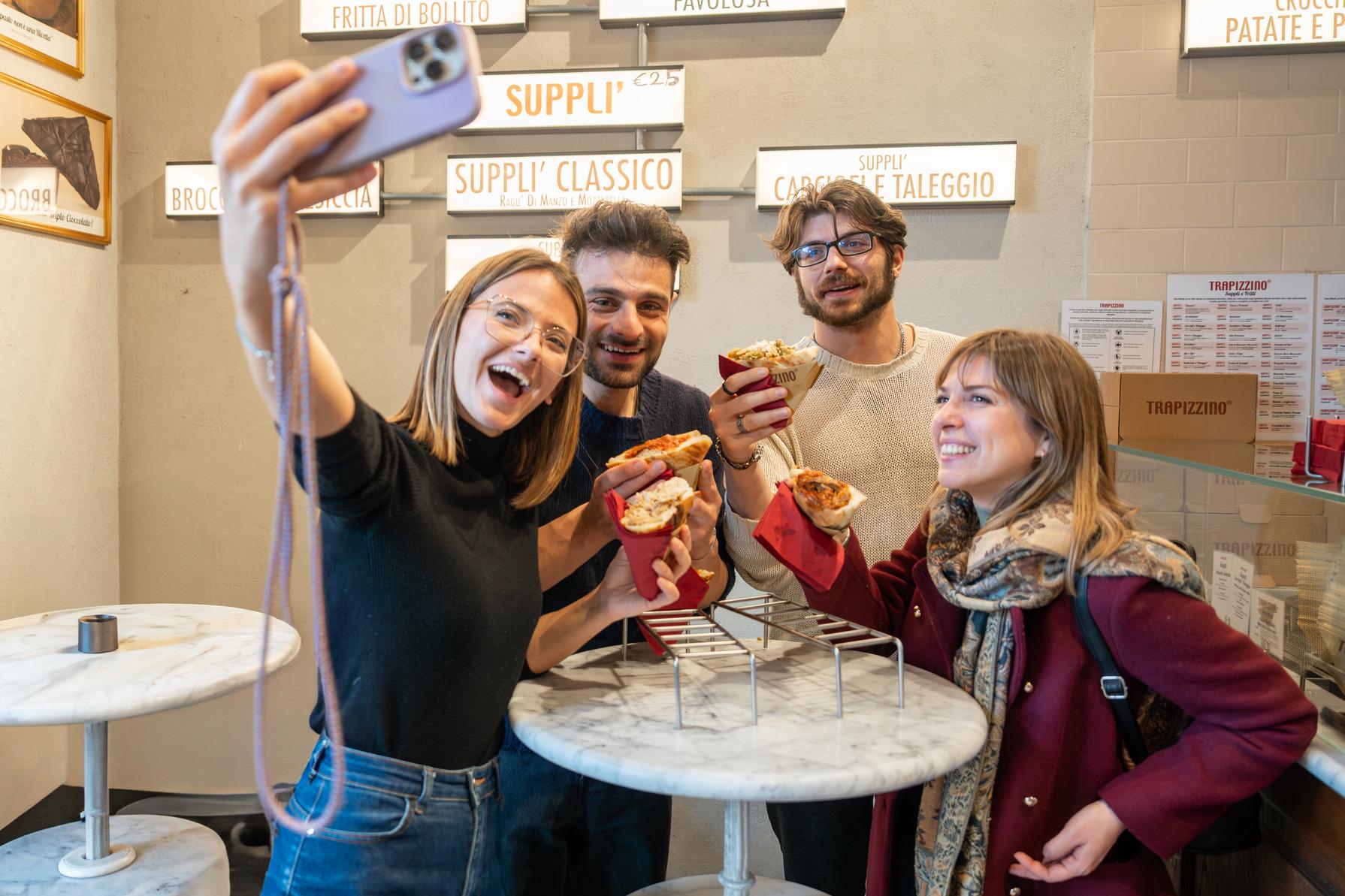
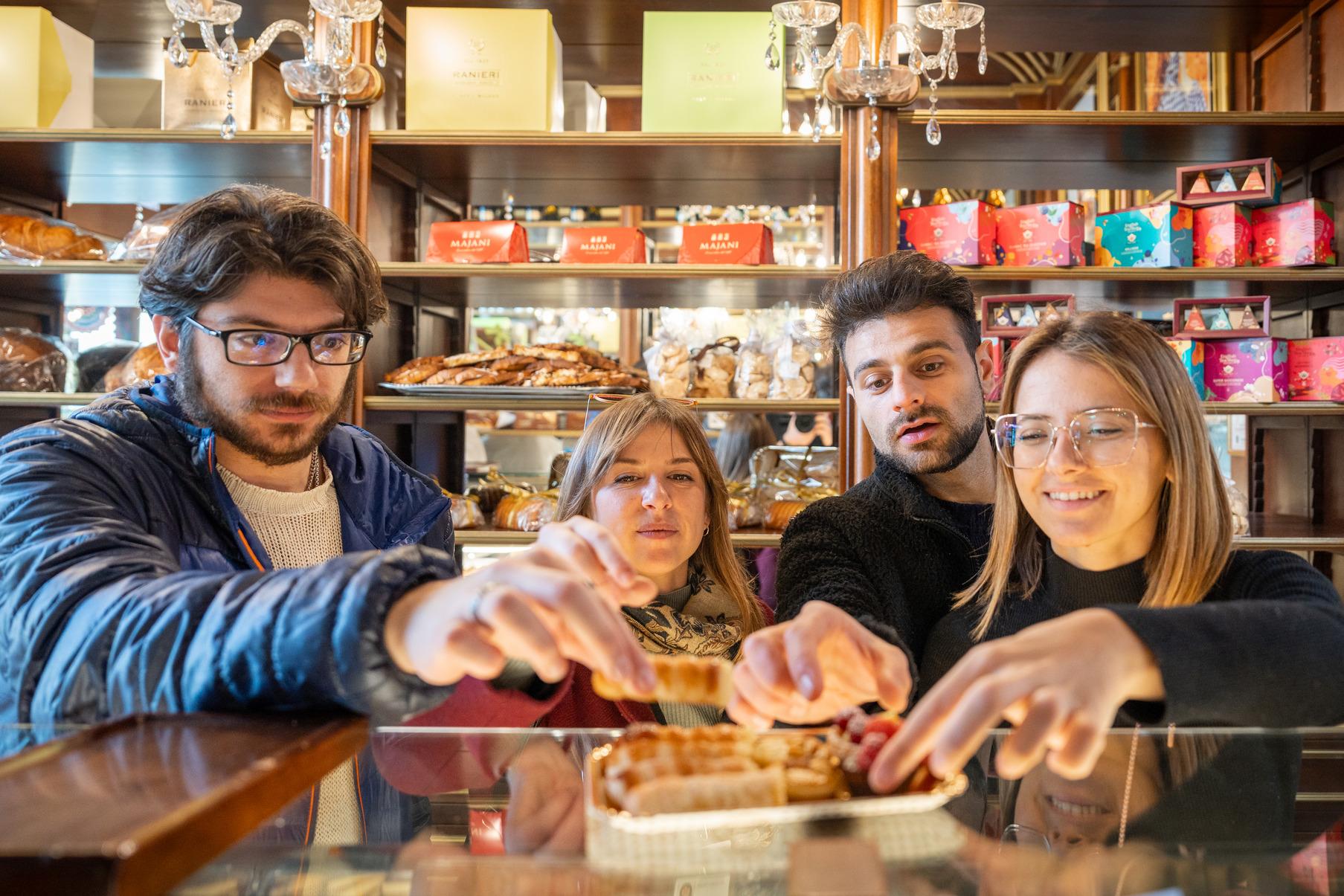
You gather at a central meeting point in the city core, usually mid-morning, when the streets still belong to residents rather than the lunchtime crowds. Aim to arrive between 10:30 and 12:00 — the markets are calmest then, and the food is at its freshest before the rush. Your guide sets the pace, and the first stop is rarely the obvious one. You start with something small and savory: a slice of cured meat, a shard of aged Grana Padano, a taste that resets your expectations. From there you walk, threading past shopfronts most visitors overlook, and you learn to read a good salumeria by its queue. You pause at a bakery counter for panettone or a plain, buttery brioche, then cross toward a market stall where a vendor hands you Gorgonzola on a fold of paper. Midway, you sit. A short aperitivo break gives you a spritz or a Campari-based pour and a plate of nibbles, and the tour shifts from tasting to conversation. You compare notes, ask where the locals actually eat, and watch the city move. The walk resumes toward the finish, which usually lands on something warm — a forkful of risotto alla milanese, gold with saffron, or a bite of cotoletta. By the time this milan food tour releases you back into the streets, you have eaten across several counters, mapped a neighborhood, and gained a shortlist you will use for the rest of your stay.

Everything You Need to Know

Your complete experience guide

All the details about your upcoming adventure in one place

Milan Food Tour Through Historic Neighborhoods

A milan food tour leads small groups through the city's markets, bakeries, and family-run delis, sampling risotto alla milanese, aged Grana Padano, panettone, and regional Lombardy wines along the way. Guided by local food experts, milan food tour tours pair each tasting with the stories behind Navigli canals and the surrounding Milanese landmarks. Booking milan gastronomy tours in advance secures your preferred slot during the busy summer season.

Milan's culinary identity was forged in rice paddies, not olive groves. The flat, water-fed plains of Lombardy made the region Europe's northern rice bowl, and that geography still shapes the plate: risotto alla milanese, stained gold with saffron, remains the city's defining dish rather than the tomato-red fare of the south. A well-run milan food tour reads this landscape backwards, tracing a bowl of risotto to the canals that once carried grain into the city center. Those canals matter. The Navigli, engineered in part with input attributed to Leonardo da Vinci during his Milanese years, were the arteries along which goods, marble for the Duomo, and provisions moved. Today the same waterways anchor an aperitivo culture that Milan effectively invented — the early-evening ritual of a bitter Campari or a spritz paired with generous small plates. Understanding this history is why a Milano food tour carries weight beyond a simple meal: it connects saffron, salami, and stracchino to centuries of trade. The city's food is a study in contrasts held in balance. There is the refinement of the Galleria Vittorio Emanuele II, the 19th-century glass-vaulted arcade where historic cafés still serve, and there is the plainer honesty of the working markets, where cured meats hang and cheesemongers slice wedges of Gorgonzola from the nearby countryside. Osso buco, cotoletta, mostarda, and panettone — the tall, candied Christmas bread that originated here — all belong to the same lineage of patient, ingredient-led cooking. Milan wears its wealth quietly at the table. Unlike Bologna or Naples, it does not shout about food; it assumes you already know. That reticence is precisely what a guided milan food tour dissolves, opening doors that a visitor rushing between the Duomo and the Last Supper would never notice. The tastings favor freshness over spectacle, which is why the recommended arrival window falls between 10:30 and 12:00, when the markets and shops are less crowded and the produce is at its brightest before the lunch rush. Value here is straightforward and worth stating plainly. There is no entrance fee and no gate — free entry is the rule, and the cost is paid per booking rather than per person at a turnstile, which means the price you compare is the operator's tasting fee, not a hidden ticket surcharge. Weighed against the number of stops, the seated aperitivo, and a guide who separates the tourist traps from the genuine Lombard institutions, the proposition is a fair one for anyone serious about eating well in a compact half-day. Few of Milan's landmarks reward curiosity so directly, or so deliciously, as its kitchens and counters do.
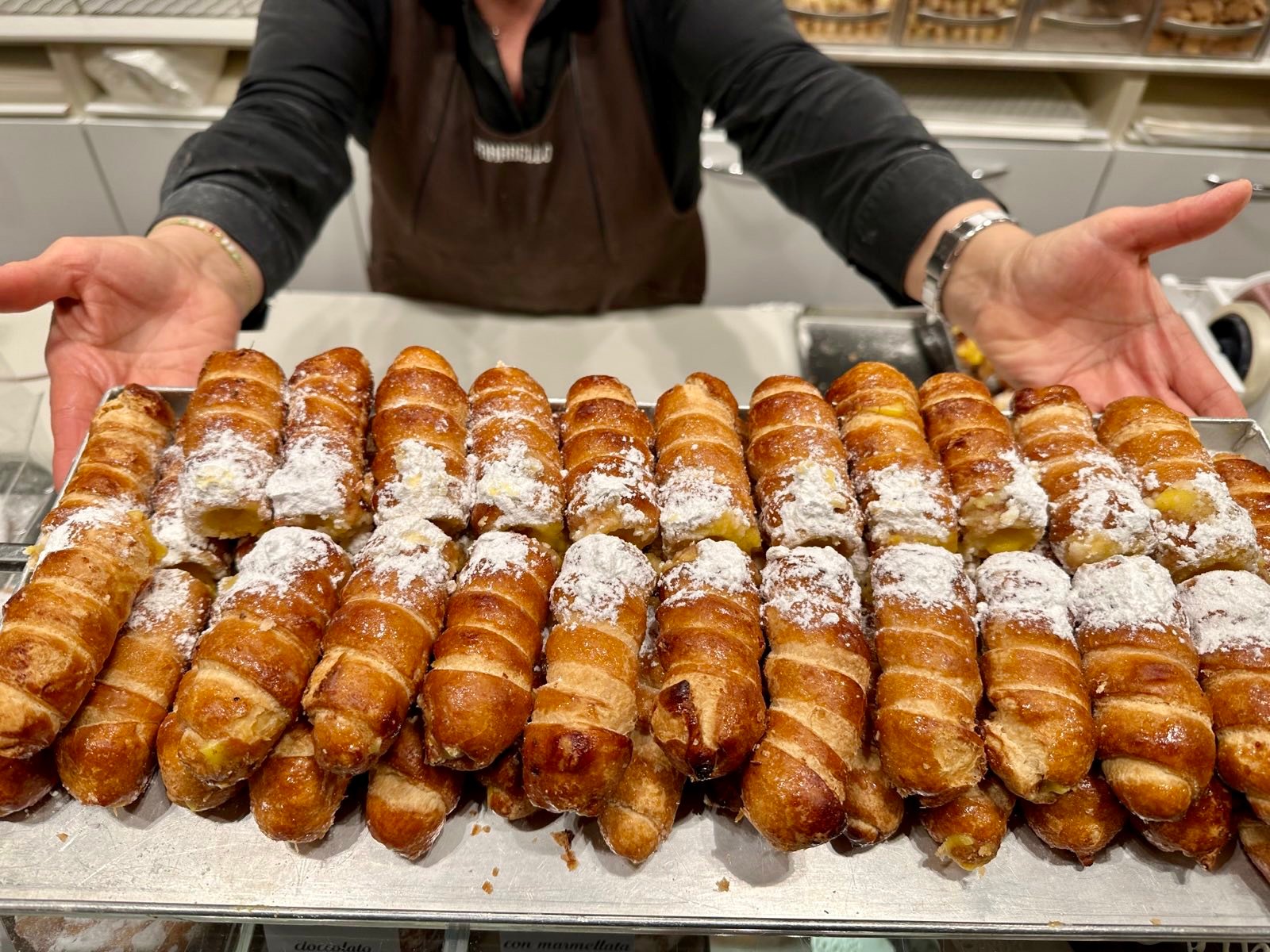
Milan wears its wealth quietly at the table; it assumes you already know.

Dress code

Comfortable walking shoes matter most, since a milan food tour covers cobblestones in Navigli and uneven pavement near covered markets. Smart-casual is fine for entering churches or covered arcades along the route; shorts and sandals are acceptable in summer heat, but swimwear or bare torsos are not permitted inside markets or eateries.

Bags & security

A small daypack or crossbody bag is fine on most milan food tour routes; large suitcases, rolling luggage, and oversized backpacks are typically not allowed inside covered markets like Mercato Centrale or smaller food stalls in Navigli. Some indoor market venues run bag checks at busy entrances, particularly during weekend rushes.

Photography

Personal photography and phone photos are welcome throughout a milan food tour, including inside covered markets and at street-food stalls. Tripods, professional lighting rigs, and drone use are generally restricted in pedestrian zones and market interiors without separate permits.

Families & strollers

Children are welcome on most daytime departures, and tasting portions can usually be shared rather than doubled per child. Strollers are manageable on Navigli's paved canal paths but awkward inside crowded covered markets.

Accessibility

Central routes through Duomo, Brera, and the Navigli canal paths are largely flat and step-free, though some historic buildings and covered market entrances have thresholds or short staircases. Travelers should flag mobility needs when booking a milan food tour so the operator can adjust the walking route or stop selection.

Food & drink

Tastings are provided as part of the booked stops; bringing outside food into covered markets or partner venues is generally discouraged. Bottled water is allowed throughout, and most venues can accommodate vegetarian requests with advance notice, though severe allergies should be flagged before booking since not every stall can guarantee allergen-free preparation.

Not allowed

× Large suitcases × Rolling luggage × Glass bottles brought from outside × Outside alcohol × Weapons of any kind × Drones × Tripods in market interiors × Large backpacks (over daypack size) × Pets other than service animals × Skateboards or scooters × Open flames × Loudspeakers

What to bring

✓ Comfortable shoes ✓ Reusable water bottle ✓ Light jacket for evening ✓ Cash for small vendors ✓ Phone or camera ✓ Sun hat in summer ✓ Any allergy card ✓ Small daypack

Opening hours

Mon Closed

No departures scheduled

Tue 10:00 – 22:00
Wed 10:00 – 22:00
Thu 10:00 – 22:00

Popular evening slot

Fri 10:00 – 22:00

Book ahead for weekend crowds

Sat 10:00 – 22:00

Busiest day, markets fill fast

Sun 10:00 – 22:00

Antiques market adds foot traffic

Closures & exceptions

  • ·Every Monday — Weekly closure
  • ·Dec 25 — Christmas Day
  • ·Jan 1 — New Year's Day

At a glance

Best hours

10:30–12:00, before the lunch rush thins out the stalls

Meeting point

Milan city center, meeting point varies by operator, Milan, Italy

Step-free routes

Most Navigli and Duomo-area stops are wheelchair accessible

Season

Summer heat peaks midday — mornings stay cooler for walking

Bag policy

Small daypacks only, no rolling luggage on tastings

Neighborhoods covered

Navigli, Brera, Duomo, or Chinatown depending on route

Getting there

Public transport · 15–25 min from most city hotels · EUR 2.20 single ticket

Metro lines M1, M2, and M3 all serve central stops near the Duomo, with the Centrale FS stop on M2/M3 close to Mercato Centrale.

Walk · 15–20 min between central stops · Free

The historic center is compact and largely flat, connecting the Duomo, Brera, and Castello Sforzesco within a 15–20 minute walk.

Taxi · 10–15 min within the center · EUR 10–20 typical fare

Taxis and ride-hailing apps reach central meeting points quickly from most hotels or the airport rail terminals.

Bike · 10–15 min between districts · EUR 3 for a 24-hour pass

Milan's bike-share system (BikeMi) has docking stations near the Duomo and along the Navigli canals.

Cancellation policy

Bookings can typically be cancelled up to 24 hours before the scheduled start time for a full refund; cancellations made later or no-shows are generally non-refundable. Since entrance to the streets and markets themselves is free (0 EUR), the fee being refunded is the per-booking tour price, not a gate charge.

Plan your time

How long do you need?

Recommended time

3-4 hours

A typical milan food tour runs three to four hours, covering four to six tasting stops paced between walking segments through the city center. Booking the 10:30-12:00 slot means markets are stocked but not yet picked over, and stalls haven't hit the lunchtime crush. Add 30 minutes if your group lingers over the aperitivo or gelato stop, and subtract little else, since queues at individual counters rarely run long when a guide has already secured the order. Evening bookings cover the same stops but trade market freshness for a livelier, more social crowd.

Crowd levels through the day

Late morning (10:30-12:00) Light, best for freshness
Early afternoon (12:00-14:00) Building, lunch rush
Mid afternoon (14:00-16:00) Moderate, shops settle
Early evening (16:00-18:00) Light to moderate
Aperitivo hours (18:00-20:00) Busy, social peak
Late evening (20:00-22:00) Winding down
Plan ahead

When to go — year at a glance

Weather · crowds · average price — dots go green to amber to red as each metric rises.

Spring (Apr–Jun)

Mild temperatures around 15–22°C and blooming outdoor markets make spring comfortable for walking routes, with fewer tourists than summer.

Summer (Jul–Aug)

Daytime heat can reach 30°C or higher, so late-morning or evening departures are more comfortable than midday; this is peak tourist season with the largest crowds.

Autumn (Sep–Oct)

Cooler weather in the high teens to low 20s°C and harvest-season produce make September and October a favored window for market visits.

Winter (Dec–Feb)

Cold, often below 10°C, with shorter daylight hours; indoor covered markets like Mercato Centrale stay comfortable year-round, and the Oh Bej! Oh Bej! street fair runs in early December.

Insider tips

Helpful tips for your visit

Book in advance

Weekend and evening departures on a milan food tour sell out during summer, so reserving a few days ahead secures the preferred time slot.

Skip breakfast

Arrive with a light appetite since most routes include 5–7 tastings across two to three hours.

Wear layers

Indoor covered markets like Mercato Centrale stay warm year-round while outdoor canal stops can be breezy in the evening.

Carry small cash

Some family-run stalls in Navigli and smaller markets prefer cash for quick purchases outside the guided tastings.

Flag allergies early

Tell the operator about dietary restrictions when booking so substitute tastings can be arranged in advance.

Combine with a landmark visit

Routes near the Duomo or Castello Sforzesco make it easy to add a short landmark stop before or after the tasting walk.

Check the weekly closure

Milan food tour departures do not run on Mondays, so plan travel dates around the Tuesday–Sunday schedule.

Where to meet

Meeting points

Duomo metro exit

Piazza del Duomo, Milan city center, Italy

Common starting point for central routes

Get directions

Navigli canal entrance

Naviglio Grande, near Porta Ticinese, Milan, Italy

Typical start for evening canal-side tours

Get directions

Mercato Centrale forecourt

Piazza IV Novembre, near Milano Centrale station, Milan, Italy

Used for station-area food routes

Get directions
The story

The history behind the site

Milan's culinary identity grew from Lombard regional cooking, where rice replaced wheat as the plain's dominant crop. Cistercian monks near Milan drained marshland and planted paddies in the 15th century. Rice from these fields fed the city. By the 16th century, saffron reached local kitchens through Milan's textile trade, and a legend dates saffron-tinted risotto to 1574, when a glassworker's apprentice tinted a wedding dish gold. Risotto alla Milanese fixed itself as a city staple. The Navigli canals, begun in 1179 and extended under Ludovico Sforza in the 1490s with counsel attributed to Leonardo da Vinci, carried grain, salt, and marble into the center. Barges also moved provisions to the markets that a modern milan food tour now threads. Trade concentrated cooks, butchers, and grocers along the water. The cotoletta alla Milanese, a bone-in veal cutlet fried in butter, appears in a 1134 abbey record and became civic shorthand for Milanese frugal richness. Unification arrived in 1861, and railways bypassed the canals. The last central Navigli were covered over by 1930, erasing the working waterfront. Austerity years and the 1943 bombing scarred the old market quarters. Yet the dishes survived because families cooked them. Postwar recovery drew southern migrants who layered new flavors onto Lombard foundations. The Navigli district was restored from the 1970s onward, and by 2015, tied to the Expo food theme, guided eating routes multiplied. A Milan culinary tour today walks Brera, the Navigli, and the market lanes, and milan food tour tickets are sold by many small operators. Booking a milan food tour tour usually means a per-group price rather than a gate fee, with morning slots favored. Reputable milan food tour tours pair risotto and cotoletta with panettone, the domed Christmas bread documented in Milan by the early 1800s. The city's Milan landmarks and its plates now share one narrative.

12th c.

A 1134 abbey record notes a breaded veal cutlet, ancestor of the cotoletta alla Milanese.

1179

Construction of the Navigli canals begins, later carrying grain and salt into central Milan.

1490s

Ludovico Sforza extends the canal network, with counsel attributed to Leonardo da Vinci.

1574

A wedding-feast legend dates saffron risotto alla Milanese to this year.

1861

Italian unification and new railways begin displacing canal-borne food trade.

1930

The last central Navigli are covered over, erasing the working waterfront.

1970s

Restoration of the Navigli district revives the quarter as a dining and market zone.

2015

Milan's Expo food theme spurs the growth of guided culinary walking routes.

Photo spots

Best photo spots

Alzaia Naviglio Grande

Best light · Sunset, before the evening crowds thicken

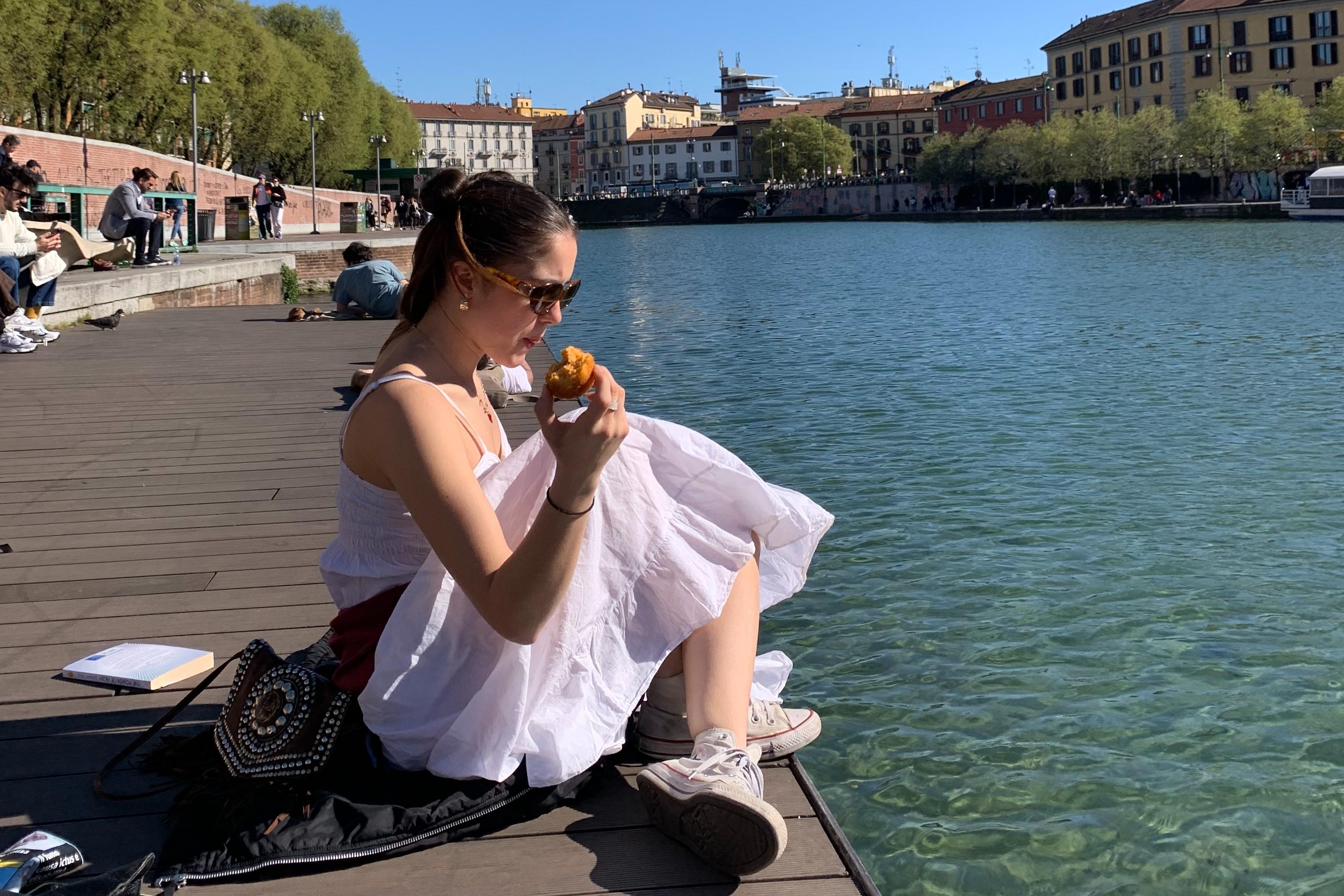
The pedestrianized towpath on the canal's west bank gives the classic shot: low ringhiera houses with iron-railing balconies mirrored in still water, best framed from one of the small footbridges looking down the canal. Stand back from the railing edge for the full reflection, and expect outdoor tables and passersby in frame during aperitivo hours.

Vicolo dei Lavandai

Best light · Late morning, light crowds

A narrow side alley off the towpath preserving the original slanted stone washbasins under a tiled roofing, plus an early-1900s centrifuge machine at number 6, both reachable on foot in minutes from the canal. Shoot straight down the slabs for the strongest lines, or crouch low for a worm's-eye angle on the stonework.

Via Fiori Chiari

Best light · Morning before shops fill with browsers

A pedestrianized Brera street lined with market stalls, flower shops, and cafe awnings; many stops on a milan food tour thread past here since the block sits between the Pinacoteca and the market streets near San Marco. Shoot along the cobblestones toward the street's slight curve for depth, or angle up at the striped awnings.

Via Madonnina

Best light · Weekday mornings

A quieter, narrower Brera lane running parallel to Via Fiori Chiari, known for artisan shopfronts and a more intimate cobblestone corridor with less foot traffic. Frame it from one end looking through the full length of the street for a tunnel-like perspective.

Piazza del Carmine

Best light · Mid-morning, before lunch rush

Brera's social hub, ringed by cafes and market-adjacent side streets, with outdoor tables that make a natural wide shot of neighborhood life around the church facade. Shoot from the church steps or a cafe corner for the full square in frame.

Gallery

Moments from the experience

With kids

Visiting with kids

A milan food tour through Navigli works well with kids as long as you pick a family-oriented route rather than an evening aperitivo crawl, since the district's cobblestones and canal-side crowds take some navigating with a pram.

Strollers

Navigli's cobblestones make a lightweight or all-terrain stroller far more manageable than a bulky travel system; several operators explicitly allow prams on their walking tour, though the route isn't wheelchair accessible.

Best ages

Look for a family-style Milan landmarks tour rather than a boozy aperitivo edition, since some operators note their standard Navigli tour isn't their most child-friendly option; kids under 4 typically join free and skip the food portion, with paid tastings starting around age 4.

Pacing

Multiple tasting stops in a row can overwhelm younger children faster than adults, so ask the guide in advance about spacing stops further apart or trimming the walking distance between vendors.

Food with kids

Confirm allergy policies before booking, as tours with severe-allergy exclusions and limited vegan or gluten-free options are common; emailing dietary needs ahead of time helps guides plan kid-friendly bites like pizza or gelato.

Group size

Smaller group tours, often capped around 12 participants, are easier for parents to manage with children than large walking groups, since it's simpler to keep a stroller or toddler within sight.

Food & drink

Where to eat nearby

There is no single canteen for this: a milan food tour strings together working districts, so booking one means routing through Navigli's canal-side trattorias, Brera's boutique delis, and stalls behind the Duomo rather than eating at one gate. Expect the guide to walk you between shopfronts, with tastings built into the ticket at most stops.

Trattoria Madonnina

€€

Navigli trattoria — canal-side

Retro decor and checkered tablecloths near the Navigli towpaths, known for straightforward Milanese classics like ossobuco. Evenings get busy with aperitivo crowds spilling from the canal bars, so a tour's earlier stop here is calmer.

Peck

€€€

Historic gastronomy near Duomo

A Via Spadari institution behind the Duomo, its ground floor deli case runs from aged cheese to truffle and cured meats. Good for a quick tasting rather than a sit-down meal, and prices run higher than average.

Rossi & Grassi

€€

Brera salumeria and deli

A 1971-founded gastronomia on Via Ponte Vetero, built around cured meats, fresh pasta, and made-to-order panini. Popular at lunch with office workers, so a mid-morning stop avoids the queue.

Mercato Centrale Milano

€–€€

Covered food hall

A multi-stall hall inside Milano Centrale station with pizza, fresh pasta, fried seafood, and gelato counters. Useful as a flexible add-on stop since it runs from early morning into the night, well beyond the core Duomo-Brera-Navigli loop.

Customer Reviews

What travelers say

Real experiences from real travelers

4.6
Based on undefined reviews
1 ★ 180
2 ★ 210
3 ★ 640
4 ★ 2100
5 ★ 9200
E
Elena R.
Spain · 2026-06-18

Navigli at sunset

Our guide walked us along the Navigli canals just as the light turned golden, and the mix of aperitivo stops and market bites felt perfectly paced. The milan food tour balanced walking with enough sitting time that nobody felt rushed. I still think about the gorgonzola we tried at a tiny cheese shop.

M
Marcus T.
Germany · 2026-05-02

Better than expected

We did the tour un giro gastronomico a Milano on a warm afternoon and covered ground I never would have found alone. Between the risotto alla milanese and a proper espresso stop, the portions added up to a full meal. Small group of eight kept it personal.

Y
Yuki N.
Japan · 2026-04-11

Good but warm day

The milan food tour tickets were easy to book and the meeting point near the Duomo was simple to find. It got hot by midday so bring water, though the shaded courtyard tastings helped. The saffron risotto and cured meats stood out most.

P
Priya S.
United States · 2026-07-05

Loved the pastry stop

This Milan gastronomy tour packed in so much local flavor without feeling touristy. Our guide explained the story behind panettone while we sampled a slice still warm from the case. The Navigli district portion at dusk was the highlight for me.

L
Lucas M.
Brazil · 2026-03-22

Authentic bites

Walking through the Brera backstreets, we tasted things I couldn't have ordered on my own thanks to the guide translating menus. One of the better milan food tour tours I've joined across Europe. The aged balsamic tasting genuinely surprised me.

S
Sophie L.
France · 2026-02-14

Rainy but great

Even with light rain the milan food tour tour kept moving between covered spots, so the weather never ruined it. We ended with a gelato that the guide insisted was the city's best, and she was right. Comfortable shoes are a must on the cobblestones.

A
Andrea B.
Italy · 2025-11-30

Solid local picks

As a northern Italian I was skeptical, but the milan skip-the-line food experience got us into a busy salumeria without the usual wait. The cotoletta and a glass of Lombardy red made a nice late lunch. Guide knew the neighborhood history well.

E
Emma W.
United Kingdom · 2026-06-29

Great first day activity

We booked this Milan landmarks and food walk for our first morning and it oriented us perfectly. By the time we finished near Piazza del Duomo we knew where to return for dinner. The mozzarella and tomato tasting in a shaded courtyard was so fresh.

D
Daniel K.
Canada · 2025-09-08

Enjoyable, a bit long

The food was consistently good and our guide friendly, though the three-hour walk felt long in the summer heat. A milan food tour like this rewards pacing yourself with the wine samples. The market visit at the start was my favorite part.

C
Chiara V.
Argentina · 2026-01-19

Winter tasting

We joined on a crisp January afternoon and the warm risotto and hot espresso stops felt ideal for the season. The guide shared Milanese food history between tastings without overloading us. A relaxed, filling walk through the old quarter.

FAQ

Frequently asked questions

Everything you need to know for your journey

Around the corner

Nearby landmarks worth a detour

Duomo di Milano

10 min

landmark

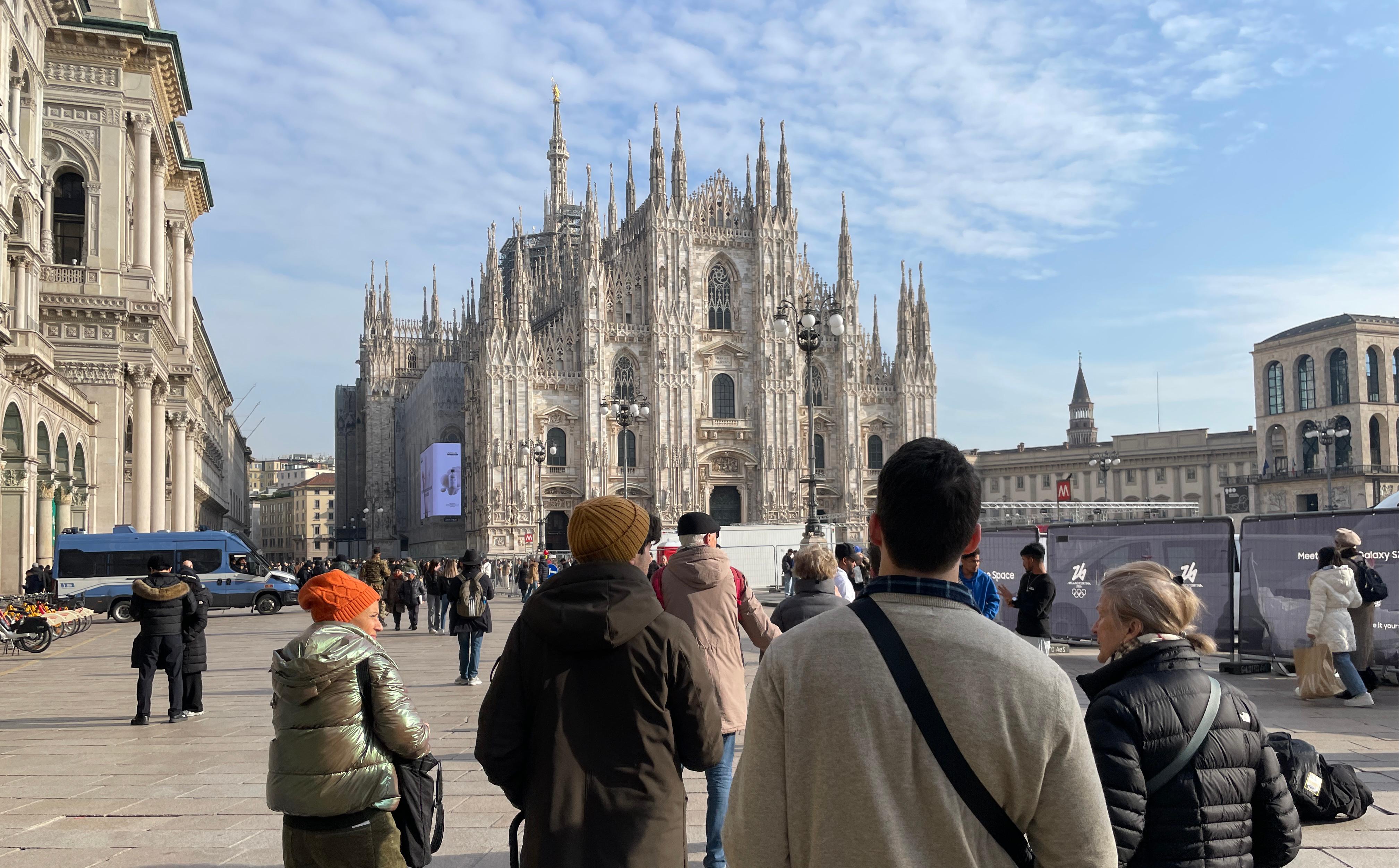
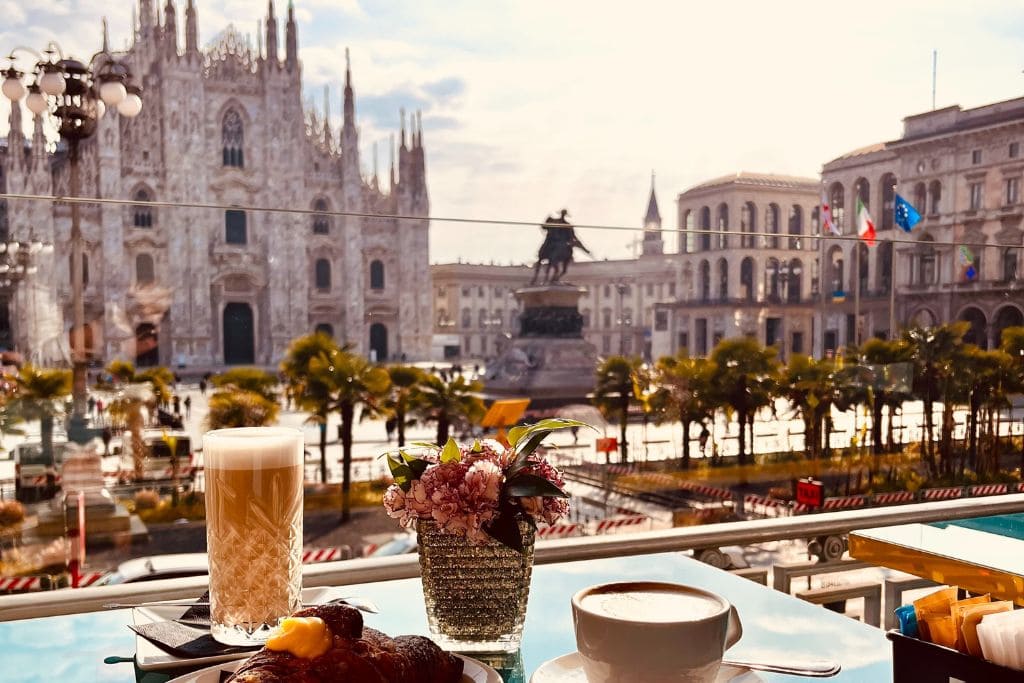
Milan's Gothic cathedral dominates the central piazza and is often paired with a milan food tour that starts or ends nearby.

Galleria Vittorio Emanuele II

12 min

landmark

This 19th-century glass-domed shopping arcade connects the Duomo to Teatro alla Scala and is one of the world's oldest active malls.

Castello Sforzesco

15 min

landmark

A 15th-century fortress built for the Sforza family, now housing several city museums and art collections.

Navigli canals

5 min

square

Milan's historic canal district, lined with bars and restaurants that come alive at aperitivo hour.

Pinacoteca di Brera

15 min

museum

A major art gallery in the Brera district holding works by Raphael and Caravaggio.

Parco Sempione

15 min

park

A large public park behind Castello Sforzesco, popular for a break between sightseeing stops.

Where to stay

Where to stay nearby

Duomo district

10 min

luxury

High-end hotels cluster around Piazza del Duomo, within easy reach of central meeting points.

Brera district

15 min

boutique

Quiet cobbled streets with boutique hotels close to the Pinacoteca di Brera and galleries.

Navigli district

5 min

mid-range

Canal-side guesthouses and mid-range hotels put travelers steps from evening tasting stops.

Central Station area

10 min

budget

Budget hotels near Milano Centrale suit early arrivals wanting quick access to Mercato Centrale.

Ready for Adventure?

Join thousands of happy travelers who have discovered this incredible experience

Book Your Experience Now